Flaming: the reaction, not the cause
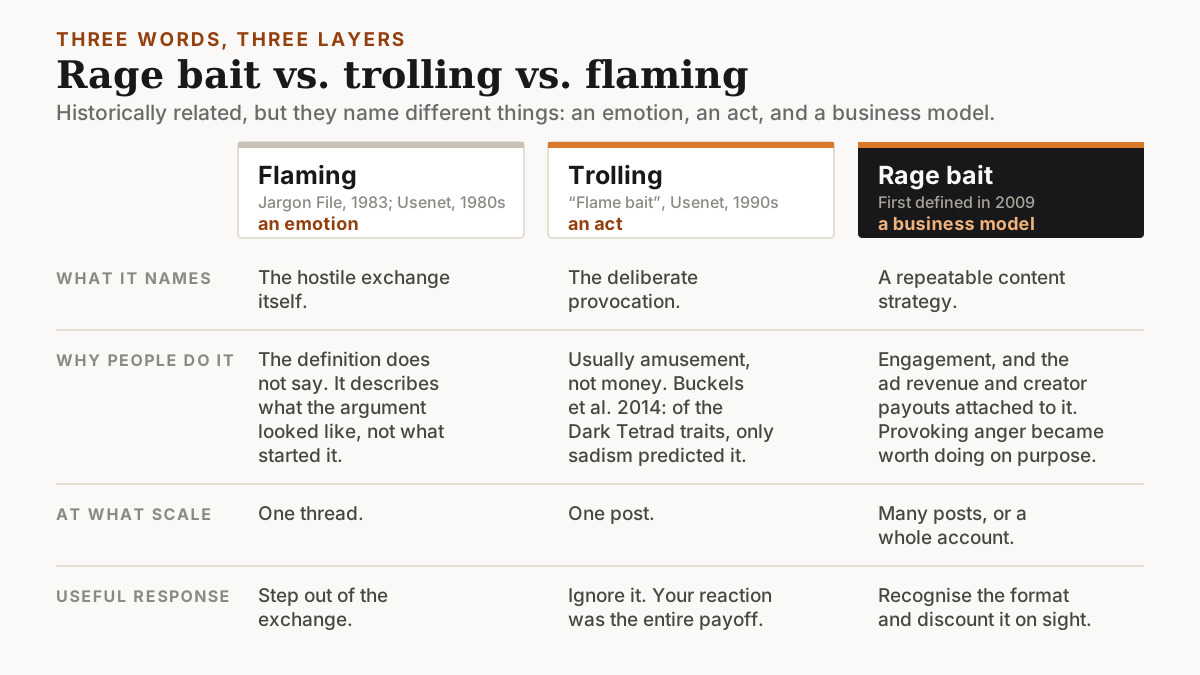
"Flaming" names the hostile exchange itself: personal, heated posts in an online argument, not whatever triggered them. The Hacker's Dictionary, an early hacker-culture reference from 1983, defined "to flame" as speaking rabidly or incessantly on an uninteresting topic, or with a patently ridiculous attitude. The behavior itself predates the definition: some of the earliest documented flame wars played out on Usenet in the early 1980s, in newsgroups with no moderators, where users posted under handles, not their real names.
That combination, anonymity plus no one enforcing norms, is usually credited as the reason flame wars became common enough on Usenet to need a name. Researchers later called the broader pattern the "online disinhibition effect": people say things online, especially when anonymous, that they would be far less likely to say face-to-face. Usenet's own community eventually responded by writing "netiquette," informal rules asking posters to cool it before a thread turned into an unmoderated shouting match. None of that history says anything about why any specific flamer started typing. Flaming describes what the exchange looked like, not what motivated it.
Trolling: doing it on purpose, usually for free
Trolling is posting something specifically to provoke a reaction, frequently with no real stake in the topic and no business purpose behind it. "Flame bait," now labeled a dated term in Internet slang, is the specific message a troll uses to trigger a flame war, distinct from the flame war itself (the exchange) and the troll (the person). A troll can post flame bait without ever intending to profit from it; the payoff is watching the reaction unfold, not a share count.
The most-cited empirical study of who trolls and why is Erin Buckels, Paul Trapnell, and Delroy Paulhus's 2014 paper in Personality and Individual Differences, based on two surveys totaling 1,215 respondents who reported their internet commenting habits alongside standard personality inventories. Trolling enjoyment correlated with sadism, psychopathy, and Machiavellianism, but when the researchers controlled for all four "Dark Tetrad" traits at once in a regression, sadism and Machiavellianism were the only traits that still independently predicted it; psychopathy's association washed out once sadism was in the model. Enjoyment of other online activities, like debating or chatting, showed no such link to sadism, which is why the researchers concluded the connection was specific to trolling rather than online argument in general. Their own summary line: "cyber-trolling appears to be an Internet manifestation of everyday sadism." That is a claim about what predicts trolling behavior in aggregate survey data, not a diagnosis of any individual troll. The same paper also found something counterintuitive: once sadism was accounted for, narcissism was negatively related to trolling enjoyment, the opposite of the trait most people assume drives it. Narcissism did predict something, just not trolling; it correlated instead with enjoying online debate about topics the person actually cared about.
Rage bait: trolling that became a repeatable business model
Rage bait shares a direct lineage with flame-baiting and trolling; What Is Rage Bait? traces an early written definition to a 2009 Urban Dictionary entry, years before platforms paid creators for engagement. What actually separates it from its ancestors isn't the tactic, provoking anger on purpose is old, it's scale and incentive. Once attention could be converted into ad revenue and creator payouts, provoking anger stopped being a pastime for some trolls and became something worth doing systematically, across many posts or an entire account, rather than once for a laugh.
That shift lines up with what ranking systems actually reward. A 2025 study in PNAS Nexus by Smitha Milli and colleagues, working with real X user data and a custom re-ranking system, found the platform's engagement-based algorithm amplified "emotionally charged, out-group hostile content" well beyond what a plain reverse-chronological feed would have shown the same users. The finding that stands out: those same users, when asked directly, did not actually prefer the posts the algorithm was surfacing more of. The system was optimizing for what people clicked and reacted to, not for what they said they wanted to see, which is exactly the gap a rage bait strategy is built to exploit; a post doesn't need to be liked to win, it just needs to get a reaction. Content engineered to be "out-group hostile" works partly because it leans on a real, documented bias: audiences are already primed to see the other side as an undifferentiated block, which makes a post attacking "them" easier to nod along with than one attacking a specific, named person would be. Why Platforms Reward Rage Bait goes further into why that incentive exists at the level of the ad-driven business model, not just one ranking algorithm.
Why the distinction changes how you respond
Calling something "trolling" implies a person doing it for their own amusement, which affects how you might respond: ignoring it usually works, because the goal was your reaction, not your money or your attention over time. Calling something "rage bait" implies a systematic tactic, less about one person's mood in the moment and more about a pattern worth recognizing and discounting on sight, the same way you'd discount an ad. If what you're actually looking at is a flame war already underway, the more useful move is usually stepping back from that specific exchange rather than trying to diagnose whether the person who started it was trolling, rage-baiting, or just genuinely upset.
These categories overlap in practice more than the definitions suggest. A post that starts as one person's low-stakes trolling can turn into rage bait once its creator notices it performs well and starts repeating the format, at which point diagnosing the original motive matters less than recognizing the pattern it became. The label has since spread past impersonal platform content too: a TikTok trend now has one partner asking the other impossible hypothetical questions on camera for no reason other than to manufacture an unwinnable reaction, the same engineered-provocation logic aimed at a partner instead of a stranger.